In an era where education debates rage on, homeschooling stands out as a disruptive force. Homeschooled students consistently outperform their public school peers academically, yet this success often breeds discomfort among traditional educators. As homeschool numbers climb—reaching an estimated 4-5 million in the U.S. by 2025 amid public school enrollment declines—the "inconvenient truth" emerges: public education's one-size-fits-all model is failing many families. This article delves into the research, statistics, and real-world insights behind homeschooling's edge, its surging appeal, and why advanced homeschoolers make some teachers uneasy.
Academic Edge: Why Homeschoolers Outperform Public School Peers
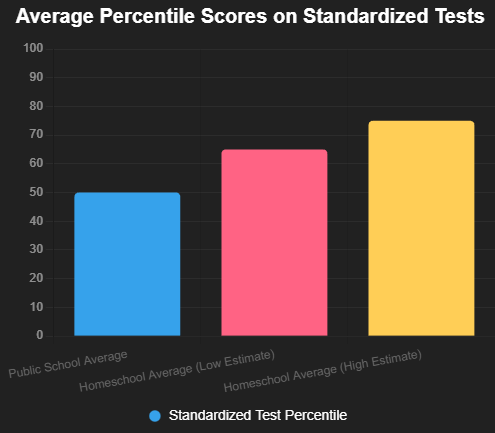
Decades of data paint a clear picture: homeschooling fosters superior academic outcomes. On standardized achievement tests, homeschooled students typically score 15 to 25 percentile points higher than public school students. This means if the average public schooler ranks in the 50th percentile, homeschoolers often land in the 65th to 75th. Some studies cite even wider gaps, up to 30 points.
A meta-analysis of 78% of peer-reviewed studies confirms homeschoolers' advantage in subjects like math, reading, and science. College readiness follows suit: 74% of homeschool alumni attend college, compared to 46% from public schools, with higher GPAs and graduation rates. Why? Homeschooling allows tailored pacing—advanced kids accelerate without bureaucratic hurdles, while others get focused support.
This isn't new; research from the National Home Education Research Institute (NHERI) has tracked these trends since the 1990s. In 2025, with public schools grappling with post-pandemic learning loss, the gap feels starker. Homeschoolers also report stronger critical thinking and self-motivation, honed in flexible environments free from rigid schedules.
The Inconvenient Truth: Homeschooling's Popularity Surge Exposes Public Education Flaws
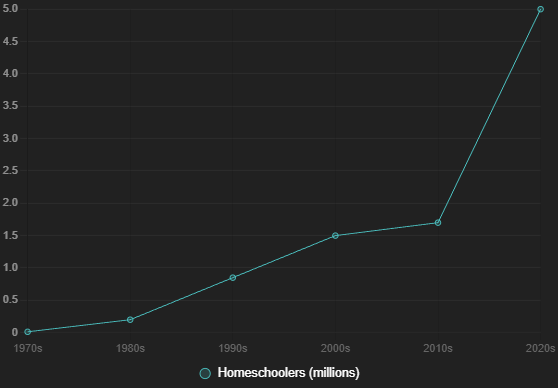
Homeschooling's growth—from 1.7 million in the 2010s to over 4 million in 2025—defies stagnant U.S. school-age populations. This 5.4% annual increase in 2024-2025 stems from parental dissatisfaction: 70% cite poor school environments, including safety concerns, drugs, and peer pressure. Another 21% point to special needs unmet by public systems, and 15% to health issues.
The inconvenient truth? Homeschooling thrives because public schools often prioritize uniformity over excellence. Customization—individualized curricula and flexible pacing—drives success, as families adapt to each child's needs. Post-COVID, remote learning exposed inefficiencies, prompting many to stay home. Resources like online co-ops and curricula have democratized access, making it viable for diverse families.
Critics highlight potential downsides: inconsistent quality if parents lack expertise, or socialization gaps. Yet, data shows homeschoolers are often more mature and socially adept, challenging myths. The real inconvenience: homeschooling's rise underscores public education's failures, from overcrowded classes to ideological biases, pushing families toward alternatives.
Teacher Discomfort: When Advanced Homeschoolers Challenge the System
Advanced homeschoolers—often grades ahead—can unsettle teachers upon re-entering public systems. Reasons include perceived threats to authority, logistical challenges, and biases against non-traditional paths.
Some educators doubt parental qualifications, viewing homeschooling as "child abuse" or leading to emotional immaturity. Public schools resist acceleration; one elite private school denied math advancement, driving families to homeschool. Gifted homeschoolers highlight public schools' inadequacies for high-IQ kids, who boredom or mismatched pacing.
Mixed-ability classrooms breed resentment; advanced kids face bullying, while teachers struggle with diverse levels. Socialization concerns persist—40% of educators claim homeschool limits skills—yet evidence shows advanced homeschoolers mature faster, thriving with older peers or outside activities.
Fundamentally, homeschool success questions the public model's efficacy, making teachers defensive. As one observer notes, schools minimize achievement gaps for funding, "making everyone equally dumb." For advanced kids, homeschool or alternatives often prove superior.
A Paradigm Shift in Education
Homeschooling's academic dominance, fueled by public school shortcomings, reveals an inconvenient reality: families are reclaiming education. While teacher discomfort stems from systemic challenges, the trend empowers parents. As numbers grow, expect more debates—but the data favors flexibility over conformity. If you're considering options, research shows homeschooling isn't just viable; it's often transformative.