The Remarkable Rise of Homeschooling: From Fringe Movement to Mainstream Revolution
In a captivating video shared on X, scenes of children playing freely in parks, crafting pottery, and exploring museums are overlaid with staggering statistics that highlight the explosive growth of homeschooling in the United States. The video paints a vivid picture of educational evolution, starting from humble beginnings in the 1970s and surging into the millions today. But what do these numbers really tell us? Let's dive into the stats presented in the video, explore their context, and uncover related trends that explain why homeschooling is no longer a niche choice but a burgeoning force in American education.
The Video's Key Statistics: A Timeline of Growth
The video chronicles homeschooling's ascent decade by decade, using approximate figures to illustrate its transformation from a rare practice to a widespread alternative. Here's a breakdown:
-
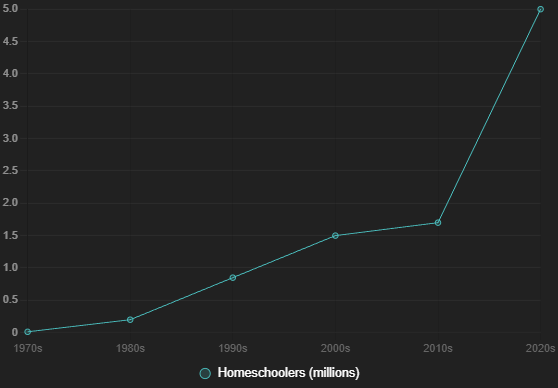
1970s: 13,000 homeschoolers
In the era of bell-bottoms and disco, homeschooling was virtually underground. The video cites just 13,000 families opting out of traditional schools, often driven by countercultural ideals or religious convictions. This tiny number represented a fraction of the roughly 50 million school-age children at the time, making homeschooling a bold, unconventional choice. -
1980s: 200,000 homeschoolers
A dramatic leap occurred in the Reagan years, with the number ballooning to 200,000. Legal battles and advocacy groups like the Home School Legal Defense Association (founded in 1983) helped legitimize the practice, paving the way for more families to embrace it amid growing dissatisfaction with public education. -
1990s: 850,000 homeschoolers
The Clinton decade saw homeschooling gain serious momentum, reaching 850,000 students. This surge aligned with increasing access to resources like curricula and support networks, as well as concerns over school safety and academic standards. By 1999, official estimates from the National Center for Education Statistics matched this figure closely. -
2000s: 1.5 million homeschoolers
Entering the new millennium, the count hit 1.5 million. Factors like the No Child Left Behind Act (2001) spotlighted public school shortcomings, pushing more parents toward personalized education. Research from this period shows steady growth, with numbers climbing from 1.1 million in 2003 to 1.5 million by 2007. -
2010s: 1.7 million homeschoolers
The video notes a modest increase to 1.7 million, reflecting a plateau before the pandemic. During this time, homeschooling diversified, attracting families from various socioeconomic backgrounds seeking flexibility and tailored learning. -
2020s: Over 5 million homeschoolers (and rising)
The video's most eye-popping claim is for the current decade: over 5 million homeschoolers just five years in. This represents a purported tripling since the 2010s, attributed to COVID-19 disruptions that exposed families to remote learning and prompted many to stick with it.
These figures from the video underscore a compound annual growth rate that turns heads— from near-zero to millions in half a century. To visualize this trajectory:
Related Statistics: Validating and Expanding the Narrative
While the video's stats provide a compelling snapshot, cross-referencing with official data reveals a nuanced picture. Homeschooling has indeed surged, but estimates vary due to inconsistent reporting (many states don't require registration). Here's how real-world figures align and extend the video's story:
-
Pre-Pandemic Baseline: By spring 2019, the National Home Education Research Institute (NHERI) estimated 2.5 million homeschool students, up from about 2 million in 2010—mirroring the video's 2010s figure. This growth rate of 2-8% annually was driven by factors like curriculum innovation and online resources.
-
The COVID Boom: The pandemic supercharged homeschooling. In 2020-2021, numbers jumped to 3.7 million, according to NHERI and U.S. Census data. At its peak, the U.S. Census Bureau's Household Pulse Survey reported 11% of households homeschooling in 2020-2021, though this included temporary remote learners.
-
Current Trends (2024-2025): Recent data pegs the number at 3.7-4 million, or about 6.7-10% of K-12 students. For instance, Brighterly reports 3.7 million for 2024-2025, while Homeschool Planet estimates 4 million in 2024. Reason Magazine notes a 5.4% growth rate this school year, suggesting the video's "over 5 million" might be a projection or inclusive of hybrid models. States like Alaska and North Carolina lead with the highest per capita rates.
-
Demographic Shifts: Homeschooling isn't just for religious families anymore. Black homeschoolers grew from 3.3% to 16.1% of the total between 2019 and 2021, reflecting broader appeal amid concerns over equity and curriculum content. Urban areas saw a 78% increase post-COVID.
-
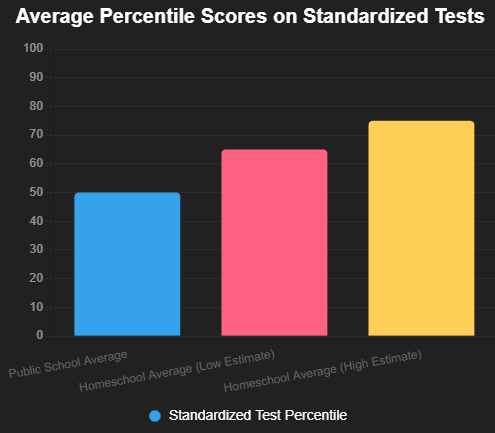
Outcomes and Benefits: Related stats bolster homeschooling's case. Homeschooled students score 15-25 percentile points higher on standardized tests and are more likely to attend college (74% vs. 46% for public school grads). Adult homeschool alumni report higher civic engagement and life satisfaction.
Defying Demographic Trends: Growth Amid Population Stagnation
What makes homeschooling's rise truly extraordinary is its defiance of broader demographic headwinds. While the number of homeschoolers has skyrocketed from 13,000 in the 1970s to over 5 million today—a growth of over 38,000%—the U.S. school-age population (ages 5-17) has barely budged, increasing just 10% from approximately 49.3 million in 1970 to 54.3 million in 2022. In fact, this population dipped in the 1980s and 1990s (to around 44 million) before recovering, and recent years show stagnation or slight decline, from 54.8 million in 2020 to 54.3 million in 2022.
Public school enrollment tells a similar story of contraction. From 40.9 million in 1980 to a peak of around 50.8 million in 2019-2020, enrollment has since fallen by 2.5% (1.28 million students) to approximately 49.5 million in 2023-2024. Projections indicate further declines, potentially to 46.9 million by 2032. This trend aligns with falling birth rates and an aging population, where school-age children now make up just 16.5% of the total U.S. population, down from 25.8% in 1970.
Homeschooling's expansion against this backdrop—capturing a growing share of a shrinking pool—highlights a profound shift in parental priorities, amplified by pandemic-era revelations and ongoing debates over public education quality.
Why the Surge? Insights Behind the Numbers
The video's stats aren't just digits—they reflect societal shifts. Parents cite safety (post-Columbine and school shootings), ideological mismatches (e.g., debates over critical race theory or gender education), and academic flexibility as top reasons. The pandemic acted as a catalyst, with 90% of states reporting sustained or increased homeschooling in 2024. Economic factors play in too: homeschooling costs average $600 per child annually, far less than private school.
Critics argue these numbers strain public funding, as homeschoolers often don't draw from tax dollars yet benefit from community resources. However, proponents see it as empowerment, echoing historical norms where home education was standard before compulsory schooling in the late 1800s.
Looking Ahead: A Rising Tide
If the video's projection holds, homeschooling could redefine education. With numbers "rising" as stated, and tools like AI tutors and online co-ops proliferating, we might see 6-7 million by decade's end. Yet, even conservative estimates like Pew's 3.4% for 2022-23 show irreversible momentum.
This video isn't just interesting—it's a window into a paradigm shift. Whether you're a parent pondering options or an observer of cultural trends, these stats signal that the future of learning is increasingly in families' hands.