Whether you're just starting to homeschool or you've been at it for years, the same questions keep coming up: What proof do I need? What are the graduation requirements? What do I show an evaluator?
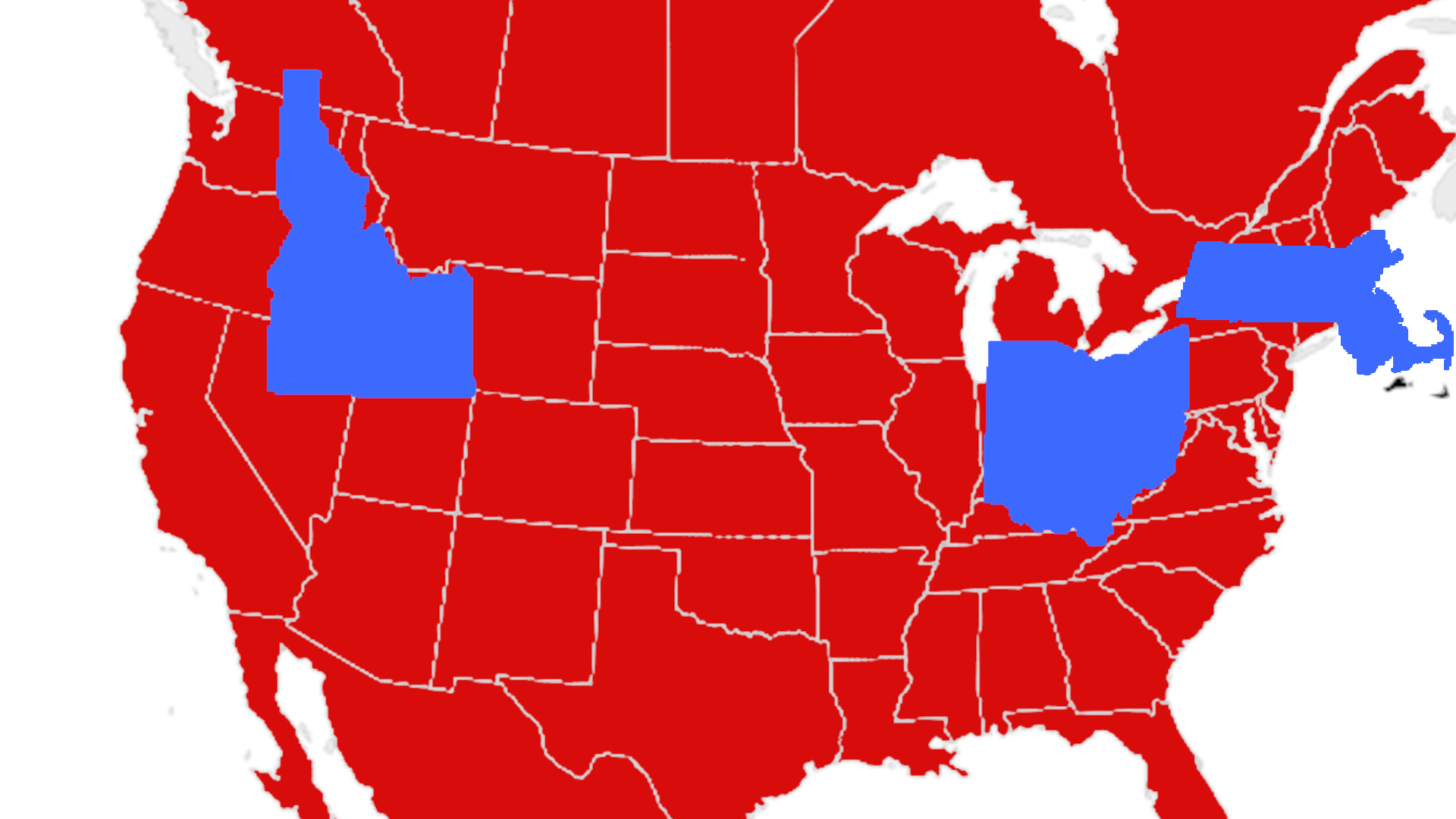
The answers depend entirely on where you live. This guide breaks down the real requirements for three states that represent the full spectrum of homeschool regulation—from Idaho's near-total freedom to Massachusetts' approval-based system.
Quick Overview:
| State | Regulation Level | Notification | Testing | Evaluator Required |
|---|---|---|---|---|
| Idaho | Very Low | NO | NO | NO |
| Ohio | Low | Annual | NO | NO |
| Massachusetts | High | Annual + Approval | Varies by district | Often YES |
Do You Have to Show Proof of Homeschooling?
This is one of the most common questions new homeschoolers ask—and the answer varies dramatically by state.
Idaho: No Proof Required
Idaho has one of the most minimal homeschool laws in the country. Here's what you need to prove to the state: nothing.
- ❌ No notification required
- ❌ No registration required
- ❌ No testing required
- ❌ No portfolio required
- ❌ No evaluator visits
- ❌ No curriculum approval
The only legal requirement: Provide instruction in "subjects commonly and usually taught in the public schools" to children ages 7-16.
That's it. There's no state official checking up on you, no forms to file, no proof to provide.
When you might need proof: While Idaho doesn't require proof for the state, you may want documentation for:
- College applications (transcripts, course descriptions)
- Returning to public school (placement decisions)
- Driver's license (proof of enrollment or graduation)
- Employment purposes
Pro tip from Idaho homeschool advocates: Don't volunteer more information than legally required. If a school official asks for curriculum details or birth certificates, you're not obligated to provide them.
Ohio: Annual Notification Only
Ohio takes a "notify and go" approach. You tell the state you're homeschooling, then you're largely left alone.
What you must provide:
-
Annual notification to your local superintendent including:
- Parent/guardian name and address
- Children's names and birth dates
- Brief outline of intended curriculum
- Assurance of required hours (900 elementary / 1,000 secondary per year)
- Assurance of required subjects
- Statement of qualifications (high school diploma OR work with someone who has a bachelor's degree OR standardized test showing you're qualified)
-
Annual assessment (one of these options):
- Standardized test
- Written narrative by a certified teacher
- Portfolio review
- Other method approved by superintendent
What you DON'T need to provide:
- ❌ Lesson plans
- ❌ Daily attendance records
- ❌ Grades
- ❌ Curriculum materials for review
- ❌ Home visits
Key point: Ohio requires you to state your curriculum outline in the notification, but you don't need approval. You notify, you proceed. The superintendent has 14 days to respond; if they don't, you're automatically approved to begin.
Massachusetts: Prior Approval Required
Massachusetts has one of the most demanding homeschool frameworks in the country—but even here, "proof" has limits.
What you must provide for approval:
-
Education plan submitted to local school district including:
- Subjects to be taught
- Materials to be used
- Lesson schedules (hours)
- Method of evaluation
- Qualifications of instructor(s)
-
Approval from superintendent or school committee before you begin (or continue each year)
-
Progress evaluation (method negotiated with district—may include):
- Standardized testing
- Portfolio review
- Written evaluation
- Progress report
What districts CANNOT require (per Brunelle v. Lynn, 1998):
- ❌ Home visits
- ❌ Observation of instruction
- ❌ Specific teacher qualifications beyond what you proposed
- ❌ Approval of specific curriculum content
Important: The Brunelle decision established that districts must approve homeschool plans that are "equal in thoroughness and efficiency" to public school education—but they cannot dictate how you achieve that.
Pro tip: If your district is being difficult, reference Care and Protection of Charles (1987) and Brunelle v. Lynn (1998). These cases establish that approval cannot be arbitrarily withheld.
Homeschool Graduation Requirements: What Each State Requires
"What do I need to do for my homeschooler to graduate?" is another question that causes unnecessary stress—because in most states, the answer is: whatever you decide.
Idaho: You Decide Everything
Idaho has no state graduation requirements for homeschoolers.
- ✅ You determine the required courses
- ✅ You determine the credits needed
- ✅ You determine grading standards
- ✅ You determine when your child graduates
- ✅ You issue the diploma
Your homeschool diploma is valid for:
- Driver's license applications (as proof of graduation)
- Employment
- College applications (with supporting transcript)
Recommended approach: Many Idaho homeschool families align with typical college-prep requirements even though it's not legally required:
| Subject | Recommended Credits |
|---|---|
| English | 4 |
| Math | 3-4 (through Algebra II) |
| Science | 3 |
| Social Studies | 3 |
| Foreign Language | 2 |
| Electives | 4+ |
Ohio: You Decide (With Required Subjects)
Ohio requires you to provide instruction in specific subjects, but there are no state graduation requirements for homeschoolers.
Required subjects during homeschooling:
- Language arts
- Geography
- U.S. and Ohio history
- Government
- Mathematics
- Health
- Physical education
- Fine arts
- First aid, safety, fire prevention
- Science
For graduation: You determine credits, grading, and graduation timing. You issue your own diploma.
Important distinction: Ohio's subject requirements apply during the homeschool years (to maintain your notification), but they don't constitute graduation requirements. How you structure high school and when you graduate is your decision.
Massachusetts: You Decide (After Approval)
Even in highly-regulated Massachusetts, there are no state graduation requirements for homeschoolers.
Required subjects (must be included in your approved plan):
- Reading
- Writing
- English language and grammar
- Mathematics
- History and social science
- Science
- Literature
- Good behavior
- Drawing
- Music
- Physical education
For graduation: After your plan is approved each year, you determine:
- High school course sequence
- Credits required
- Grading standards
- Graduation timing
- Diploma format
The catch: Your education plan must be approved annually. But within that approved plan, you have flexibility in how you structure the high school years and graduation.
What to Show an Evaluator: A Practical Guide
Not all states require evaluations, but when you do need one, knowing what to prepare reduces stress significantly.
Idaho: No Evaluator Required
Idaho doesn't require evaluations, portfolios, or any form of review.
Exception: If you want to participate in public school extracurricular activities through Idaho's dual enrollment law, you'll need to demonstrate grade-level proficiency via:
- Standardized test (average or above), OR
- Portfolio review
This evaluation makes you eligible for the current AND following school year.
Ohio: Annual Assessment (You Choose the Method)
Ohio requires an annual assessment, but you choose the method:
Option 1: Standardized Test
- Must be nationally normed
- Administered by someone qualified (varies by test)
- No minimum score required
- Just proof of participation
Option 2: Written Narrative
- From a certified teacher
- Evaluates academic progress
- Doesn't require extensive documentation—just the teacher's professional assessment
Option 3: Portfolio Review
- Reviewed by a certified teacher
- Should demonstrate work in required subjects
- No specific format required
Option 4: Other Approved Method
- Propose an alternative to your superintendent
- Must be accepted in writing
What to actually prepare for a portfolio review:
- Samples of work from each required subject (doesn't need to be everything—representative samples)
- Brief description of curriculum used
- Any test scores you have (optional but helpful)
- List of books read, projects completed, field trips taken
What you DON'T need:
- ❌ Daily lesson plans
- ❌ Hourly logs
- ❌ Grades for every assignment
- ❌ Proof of specific curriculum purchase
Massachusetts: Negotiated Evaluation
Massachusetts evaluation requirements vary by district because they're negotiated in your education plan.
Common evaluation methods:
- Standardized testing
- Portfolio review with district representative
- Progress report submitted to district
- Meeting with school officials
If you're doing a portfolio review, prepare:
-
Work samples from each subject in your approved plan
- Writing samples (various types)
- Math work showing progression
- Science projects or lab reports
- Social studies work
- Any special projects
-
Reading log (list of books read)
-
Brief narrative of the year's activities
- Field trips
- Extracurriculars
- Special achievements
-
Any test scores (if testing was part of your plan)
Key legal protections:
Per Brunelle v. Lynn (1998), the district:
- ❌ Cannot require home visits
- ❌ Cannot observe your instruction
- ❌ Cannot dictate specific curriculum
- ❌ Cannot require specific teaching credentials
You are demonstrating progress—not following a district script.
If the district is difficult:
- Document all communications
- Reference the Charles and Brunelle decisions
- Contact HSLDA or Mass HOPE for support
- Consider requesting a different evaluation method
Common Questions Answered
"Do I need to register my homeschool?"
| State | Registration Required? |
|---|---|
| Idaho | NO |
| Ohio | Notification only (not registration) |
| Massachusetts | Approval required (more than notification) |
The distinction matters: Notification means you inform the state. Registration implies enrolling in a state system. Approval means you need permission before proceeding. Idaho requires none of these. Ohio requires notification. Massachusetts requires approval.
"Can my homeschooler get a real diploma?"
Yes—you issue the diploma. In all three states:
- There is no "state diploma" for homeschoolers
- Parent-issued diplomas are legally valid
- Colleges accept homeschool diplomas with supporting transcripts
- Employers accept homeschool diplomas
Idaho specifically: Parent-issued diplomas are valid for driver's license applications and other official purposes.
"What if we want to return to public school?"
Idaho: The school determines placement. They may use testing, record review, or age-level placement. Credits from accredited programs transfer more easily.
Ohio: School districts have policies for placement. Provide whatever records you have (transcripts, portfolios, test scores). High school credit decisions are at district discretion.
Massachusetts: Your approved education plans and evaluations serve as your record. Districts assess for placement. Providing thorough documentation helps.
"Can my homeschooler play public school sports?"
| State | Sports Access |
|---|---|
| Idaho | ✅ YES—Full access by law (dual enrollment) |
| Ohio | ✅ YES—Guaranteed access by law |
| Massachusetts | ⚠️ Limited—district discretion |
Idaho: Through the dual enrollment law (Idaho Code § 33-203), homeschoolers can participate in ANY public school activity—sports, band, clubs—without taking academic classes. Just demonstrate grade-level proficiency.
Ohio: ORC § 3313.5312 guarantees homeschool access to extracurricular activities at their resident district school.
Massachusetts: Access varies by district. Some districts allow participation; others don't. No state law guarantees access.
"Do I need to keep attendance records?"
| State | Attendance Records Required? |
|---|---|
| Idaho | NO |
| Ohio | NO (but must attest to hours) |
| Massachusetts | Depends on approved plan |
Idaho: No record-keeping required by law.
Ohio: You attest to meeting hour requirements (900/1,000) in your notification, but you don't need to submit logs.
Massachusetts: Your approved plan may specify how hours are tracked. Keep whatever records align with your plan.
"What subjects do I have to teach?"
Idaho: "Subjects commonly and usually taught in public schools" (interpreted as core academics—no specific list mandated)
Ohio:
- Language arts, geography, U.S. and Ohio history, government
- Mathematics, health, physical education, fine arts
- First aid/safety/fire prevention, science
Massachusetts:
- Reading, writing, English language/grammar
- Mathematics, history/social science, science
- Literature, good behavior, drawing, music, physical education
Quick Reference: What You Actually Need
Idaho (Very Low Regulation)
| Requirement | Details |
|---|---|
| Notification | ❌ Not required |
| Approval | ❌ Not required |
| Testing | ❌ Not required |
| Portfolio | ❌ Not required |
| Evaluator | ❌ Not required |
| Graduation requirements | ❌ You decide |
| Diploma | ✅ You issue it |
| Sports access | ✅ Full access by law |
Bottom line: Just start teaching. Keep records for your own benefit (college apps, etc.), not because the state requires them.
Ohio (Low Regulation)
| Requirement | Details |
|---|---|
| Notification | ✅ Annual, to superintendent |
| Approval | ❌ Not required (notify and proceed) |
| Testing | ❌ Not required |
| Annual assessment | ✅ Your choice of method |
| Portfolio | Optional assessment method |
| Evaluator | Only if you choose that assessment |
| Graduation requirements | ❌ You decide |
| Diploma | ✅ You issue it |
| Sports access | ✅ Guaranteed by law |
Bottom line: File your notification, complete your chosen assessment method annually, and you're set.
Massachusetts (High Regulation)
| Requirement | Details |
|---|---|
| Notification | ✅ Annual education plan |
| Approval | ✅ Required before starting |
| Testing | Varies by district/plan |
| Portfolio | Common evaluation method |
| Evaluator | Often required |
| Graduation requirements | ❌ You decide (within approved plan) |
| Diploma | ✅ You issue it |
| Sports access | ⚠️ District discretion |
Bottom line: Get your plan approved, complete agreed-upon evaluations, and document your progress. Know your rights under Brunelle.
Final Thoughts
The amount of "proof" required varies wildly by state—from nothing (Idaho) to prior approval with ongoing evaluation (Massachusetts). But even in the most regulated states:
- You issue the diploma
- You determine graduation requirements
- Your homeschool is legally valid
The key is knowing your state's specific requirements and not doing more than necessary. Idaho homeschoolers don't need to create elaborate portfolios. Ohio homeschoolers don't need daily attendance logs. And Massachusetts homeschoolers have legal protections against overreaching districts.
Know your rights. Meet your state's requirements. And don't stress about proving anything beyond what the law actually requires.
Official Sources
Idaho
- Idaho Code § 33-202 — Compulsory attendance
- Idaho Code § 33-203 — Dual enrollment (sports access)
- Idaho State Dept. of Education
Ohio
- ORC § 3321.04 — Home education
- ORC § 3313.5312 — Extracurricular activities
- Ohio Dept. of Education — Home Education
Massachusetts
- M.G.L. c. 76, § 1 — School attendance
- MA Dept. of Education — Home Education
- Care and Protection of Charles, 399 Mass. 324 (1987)
- Brunelle v. Lynn Public Schools, 428 Mass. 512 (1998)
This guide is for informational purposes only and does not constitute legal advice. Laws change—always verify current requirements with official state sources.